.jpg)
martedì 18 dicembre 2007
domenica 16 dicembre 2007
LE ORME IN CONCERTO (LE ORME) - 1974
+-+Front+cover.bmp)
Nel 1974, Le Orme pubblicarono “In concerto”, un disco che segna un’epoca in quanto si tratta del primo disco live di un gruppo rock italiano. La qualità sonora lascia a desiderare, e gli stessi componenti de Le Orme erano contrari all’uscita dell’album - album che, a quanto pare, risulterebbe frutto di una registrazione “improvvisata” di un tecnico al seguito della band.
Il lato “A” del disco originale comprende due inediti: “Truck of fire” (Parti 1 e 2), il primo interamente strumentale, il secondo cantato in inglese. Il lato “B” propone invece alcuni classici del trio veneziano: in particolare, spicca il brano inedito “Preludio a Era inverno”.
Nel complesso, un disco coraggioso e interessante (ripeto, qualità sonora a parte), il quale viene a completare i miei post dedicati al periodo migliore de Le Orme (vedi “Felona e Sorona, postato il 15 marzo; “Collage”, postato il 2 aprile; “Uomo di pezza”, postato l’8 maggio; “Contrappunti”, postato il 14 settembre).
Il lato “A” del disco originale comprende due inediti: “Truck of fire” (Parti 1 e 2), il primo interamente strumentale, il secondo cantato in inglese. Il lato “B” propone invece alcuni classici del trio veneziano: in particolare, spicca il brano inedito “Preludio a Era inverno”.
Nel complesso, un disco coraggioso e interessante (ripeto, qualità sonora a parte), il quale viene a completare i miei post dedicati al periodo migliore de Le Orme (vedi “Felona e Sorona, postato il 15 marzo; “Collage”, postato il 2 aprile; “Uomo di pezza”, postato l’8 maggio; “Contrappunti”, postato il 14 settembre).
Voto personale (scarso / insufficiente / sufficiente / buono / distinto / ottimo /eccellente): Ottimo.
Le Orme, one of the most famous Italian prog rock bands, released “In concerto” in 1974 - a milestone album, due to its being the first live album ever released by an Italian rock band. It is a pity the sound recording quality leaves a great deal to be desired, and the band members themselves were not very keen on publishing this record, which would apparently be the result of an “improvised” recording made by a sound engineer following the band.
Side “A” of the original record includes two previously unpublished tracks: “Truck of fire” (Parts 1 & 2), the former being an all-instrumental piece, the latter being sung in English. Side “B” contains some of the most famous songs of this Venetian trio, plus a nice instrumental never released before: “Preludio a Era inverno”.
All things considered, “Orme in concerto” is a “daring” and very interesting record (I repeat, apart from its sound recording quality), which completes the series of my posts dedicated to Le Orme at their best (see “Felona e Sorona, posted on March 15th, “Collage”, posted on April 2nd; “Uomo di pezza”, posted on May 8th; and “Contrappunti”, posted on September 14th).
Side “A” of the original record includes two previously unpublished tracks: “Truck of fire” (Parts 1 & 2), the former being an all-instrumental piece, the latter being sung in English. Side “B” contains some of the most famous songs of this Venetian trio, plus a nice instrumental never released before: “Preludio a Era inverno”.
All things considered, “Orme in concerto” is a “daring” and very interesting record (I repeat, apart from its sound recording quality), which completes the series of my posts dedicated to Le Orme at their best (see “Felona e Sorona, posted on March 15th, “Collage”, posted on April 2nd; “Uomo di pezza”, posted on May 8th; and “Contrappunti”, posted on September 14th).
My personal mark (very poor / poor / pass / good / fairly good / very good /excellent): Very good.
LE ORME (1974):
Aldo Tagliapietra - voce, basso, chitarre (vocals, bass, guitars)
Tony Pagliuca - tastiere (keyboards)
Michi Dei Rossi - batteria e percussioni (drums and percussions)
TRACK LIST:
1. Truck of fire (Part 1)
2. Truck of fire (Part 2)
3. Sguardo verso il cielo
4. Preludio a Era inverno
5. Era inverno
6. Ritorno al nulla
7. Collage (sigla)
8. Collage
LE ORME IN CONCERTO (LE ORME) - 43,0 MB
sabato 15 dicembre 2007
RELAYER (YES) - 1974
+-+Front+cover.jpg)
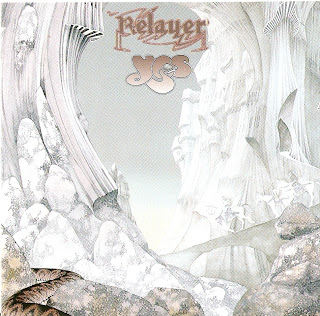
Pur essendo un fan degli Yes fin dall’adolescenza (cioè, più di trent’anni fa), la prima volta che ho ascoltato "Relayer” avevo 44 anni. Davvero una vergogna! Forse per il fatto che, ricordando le recensioni che leggevo da ragazzo, “Relayer” fu giudicato agli inizi un disco mediocre. Forse per il fatto che Rick Wakeman aveva abbandonato il gruppo, lasciando posto a Patrick Moraz il quale, a mio parere, se la cavò egregiamente in quello che rimane l’unico suo album di militanza negli Yes.
Ma quando, nell’estate 2004, acquistai ed ebbi modo, appunto, di sentire per la prima volta “Relayer”, rimasi colpito positivamente. L’album ripropone lo stesso formato di “Close to the edge”: un lungo, unico brano sul primo lato e due brani più brevi sul secondo. Lo stile musicale invece è piuttosto diverso, con sonorità più prossime al jazz rock.
“The gates of delirium” occupa l’intera prima facciata del vinile originale ed è una suite sulla guerra, con una orchestrazione molto densa e a tratti molto aggressiva. Il testo è ispirato a “Guerra e pace” di Tolstoj. La sezione finale, nota come “Soon”, rappresenta, a mio parere, uno degli apici compositivi del gruppo. “Sound chaser” è un brano con forti connotazioni rock-jazz, e può essere assimilato ad alcuni lavori dei King Crimson dell'epoca di “Starless and Bible black” e “Red”. Il brano è quasi completamente strumentale ed è caratterizzato da sezioni improvvisate e dissonanze; in particolare, vi si trova uno dei più "violenti" assoli di chitarra elettrica di Steve Howe. “To be over” rappresenta il momento più melodico dell'album, e include complessi arrangiamenti di Steve Howe alla chitarra e al sitar.
Ma quando, nell’estate 2004, acquistai ed ebbi modo, appunto, di sentire per la prima volta “Relayer”, rimasi colpito positivamente. L’album ripropone lo stesso formato di “Close to the edge”: un lungo, unico brano sul primo lato e due brani più brevi sul secondo. Lo stile musicale invece è piuttosto diverso, con sonorità più prossime al jazz rock.
“The gates of delirium” occupa l’intera prima facciata del vinile originale ed è una suite sulla guerra, con una orchestrazione molto densa e a tratti molto aggressiva. Il testo è ispirato a “Guerra e pace” di Tolstoj. La sezione finale, nota come “Soon”, rappresenta, a mio parere, uno degli apici compositivi del gruppo. “Sound chaser” è un brano con forti connotazioni rock-jazz, e può essere assimilato ad alcuni lavori dei King Crimson dell'epoca di “Starless and Bible black” e “Red”. Il brano è quasi completamente strumentale ed è caratterizzato da sezioni improvvisate e dissonanze; in particolare, vi si trova uno dei più "violenti" assoli di chitarra elettrica di Steve Howe. “To be over” rappresenta il momento più melodico dell'album, e include complessi arrangiamenti di Steve Howe alla chitarra e al sitar.
Voto personale (scarso / insufficiente / sufficiente / buono / distinto / ottimo / eccellente): Ottimo.
Though Yes have been one of my favourite rock bands since I was in my teens (that is, over 30 years ago), I first listened to “Relayer” when I was 44. Shame on me! Maybe, this failing of mine is due to the many reviews I used to read on rock music magazine when I was a boy – such reviews often labelling “Relayer” as a “poor” album. In fact, this record was received unfavourably by the critics at the time of its release (1974). Perhaps, Rick Wakeman’s departure from the band had contributed to this, in the opinion of the critics. However, replacement keyboardist Patrick Moraz played very well on “Relayer” - the only one album he recorded with Yes.
But when I bought and listened for the first time to “Relayer” in 2004, I was positively impressed by it. The album has the same “structure” as “Close to the edge”: one long “suite” on side “A” of the original vinyl record, and two shorter pieces on side “B”. Conversely, the musical style is somewhat different, closely resembling a rock-jazz record.
“The gates of delirium” is a suite about war, with rich and, in some cases, aggressive orchestration. The lyrics draw inspiration from “War and peace” by N. Tolstoj. The closing section (“Soon”) is, in my opinion, one of the best pieces of music Yes ever composed. “Sound chaser” is a heavily rock-jazz oriented track, which can be assimilated with some compositions by King Crimson at the time of their releasing “Starless and Bible black” and “Red”. This piece is almost completely an instrumental one and features improvised sections and dissonances: in particular, it contains one of Steve Howe’s “wildest” guitar solos. “To be over” gives a melodious touch to the album, with pleasant tunes and intricate arrangement by Steve Howe on guitars and sitar.
But when I bought and listened for the first time to “Relayer” in 2004, I was positively impressed by it. The album has the same “structure” as “Close to the edge”: one long “suite” on side “A” of the original vinyl record, and two shorter pieces on side “B”. Conversely, the musical style is somewhat different, closely resembling a rock-jazz record.
“The gates of delirium” is a suite about war, with rich and, in some cases, aggressive orchestration. The lyrics draw inspiration from “War and peace” by N. Tolstoj. The closing section (“Soon”) is, in my opinion, one of the best pieces of music Yes ever composed. “Sound chaser” is a heavily rock-jazz oriented track, which can be assimilated with some compositions by King Crimson at the time of their releasing “Starless and Bible black” and “Red”. This piece is almost completely an instrumental one and features improvised sections and dissonances: in particular, it contains one of Steve Howe’s “wildest” guitar solos. “To be over” gives a melodious touch to the album, with pleasant tunes and intricate arrangement by Steve Howe on guitars and sitar.
My personal mark (very poor / poor / pass / good / fairly good / very good / excellent): Very good.
YES (1974):
Jon Anderson - voce solista (lead vocals)
Chris Squire - basso, cori (bass, backing vocals)
Patrick Moraz - tastiere (keyboards)
Chris Squire - basso, cori (bass, backing vocals)
Patrick Moraz - tastiere (keyboards)
Steve Howe - chitarre, cori (guitars, backing vocals)
Alan White - batteria e percussioni (drums and percussions)
TRACK LIST:
1. The gates of delirium
2. Sound chaser
3. To be over
2. Sound chaser
3. To be over
RELAYER (YES) - 43,1 MB
BELLEZZA IN FIORE (BLOSSOMING BEAUTY)
IL CUCCHIAIO, LA TAZZA O IL SECCHIO? (A SPOON, A CUP OR A BUCKET?)
I PARLAMENTARI ITALIANI NON BRILLANO PER INTELLIGENZA, LO SAPPIAMO. ACCUSE INGIUSTIFICATE? NIENTE AFFATTO: ECCO LA PROVA (BASATA SU UN FATTO VERO).
Un parlamentare italiano visita il reparto psichiatrico di un ospedale per accertarsi delle condizioni nelle quali vengono ospitati i pazienti. Durante la visita, il parlamentare chiede al primario:
“Quale metodo usate per capire se una persona necessita di un ricovero?“
“Molto semplice. Riempiamo una vasca da bagno con acqua, poi diamo al paziente un cucchiaio, una tazza ed un secchio e gli diciamo di svuotare la vasca“.
“Ah, capisco,“ dice il parlamentare. “Una persona normale ovviamente usa il secchio perchè è più grande della tazza e del cucchiaio“.
“Sbagliato,“ risponde il primario. “Una persona normale toglierebbe il tappo! Dunque, come la vuole la stanza? Con vista sul giardino?“
THE MEMBERS OF THE ITALIAN PARLIAMENT ARE NOT CONSPICUOUS, EVERYBODY KNOWS THIS IN ITALY. AN UNJUSTIFIED ACCUSATION? NOT AT ALL: BELOW IS THE EVIDENCE OF THIS (BASED ON A TRUE FACT).
An Italian MP (Member of the Italian Parliament) is visiting a hospital psychiatric ward to check the conditions in which the inmates are kept. During the inspection, the MP asks the head of the ward:
“What method do you apply to determine whether a patient needs be hospitalized?“
“Quite simple. We fill a bathtub with water, then we give the patient a spoon, a cup and a bucket and ask them to empty the tub“.
“I see,“ the MP says. “A person of sound mind will obviously use the bucket because it’s larger than the cup and the spoon“.
“Wrong answer,“ the head of the ward replies. “A person of sound mind will take the plug out! So, what kind of room would you like? A room with a view of the garden?“
Un parlamentare italiano visita il reparto psichiatrico di un ospedale per accertarsi delle condizioni nelle quali vengono ospitati i pazienti. Durante la visita, il parlamentare chiede al primario:
“Quale metodo usate per capire se una persona necessita di un ricovero?“
“Molto semplice. Riempiamo una vasca da bagno con acqua, poi diamo al paziente un cucchiaio, una tazza ed un secchio e gli diciamo di svuotare la vasca“.
“Ah, capisco,“ dice il parlamentare. “Una persona normale ovviamente usa il secchio perchè è più grande della tazza e del cucchiaio“.
“Sbagliato,“ risponde il primario. “Una persona normale toglierebbe il tappo! Dunque, come la vuole la stanza? Con vista sul giardino?“
THE MEMBERS OF THE ITALIAN PARLIAMENT ARE NOT CONSPICUOUS, EVERYBODY KNOWS THIS IN ITALY. AN UNJUSTIFIED ACCUSATION? NOT AT ALL: BELOW IS THE EVIDENCE OF THIS (BASED ON A TRUE FACT).
An Italian MP (Member of the Italian Parliament) is visiting a hospital psychiatric ward to check the conditions in which the inmates are kept. During the inspection, the MP asks the head of the ward:
“What method do you apply to determine whether a patient needs be hospitalized?“
“Quite simple. We fill a bathtub with water, then we give the patient a spoon, a cup and a bucket and ask them to empty the tub“.
“I see,“ the MP says. “A person of sound mind will obviously use the bucket because it’s larger than the cup and the spoon“.
“Wrong answer,“ the head of the ward replies. “A person of sound mind will take the plug out! So, what kind of room would you like? A room with a view of the garden?“
martedì 11 dicembre 2007
BONNE SOIRÈE (PINO DANIELE) - 1987
+-+Front+cover.jpg)
Di Pino Daniele ho postato un solo album (“Ferryboat”) lo scorso 23 aprile. Un artista, Pino Daniele, che ho seguito con passione fino al 1987, anno di pubblicazione di “Bonne soirèe”, l’album che, non a caso, ho deciso di postare oggi.
Un album orientato prevalentemente al rock-jazz, seppur con qualche riferimento etnico. Grazie al solido gruppo di musicisti che hanno partecipato al lavoro, Pino Daniele è riuscito a realizzare un album piacevole, caratterizzato dai consueti testi a metà fra napoletano, inglese e italiano.
I miei brani preferiti comprendono, oltre al pezzo d’apertura, “Boys in the night”, “Aria”, “Mama e!” e “Occhi grigi”.
Voto personale (scarso / insufficiente / sufficiente / buono / distinto / ottimo / eccellente): Distinto.
Un album orientato prevalentemente al rock-jazz, seppur con qualche riferimento etnico. Grazie al solido gruppo di musicisti che hanno partecipato al lavoro, Pino Daniele è riuscito a realizzare un album piacevole, caratterizzato dai consueti testi a metà fra napoletano, inglese e italiano.
I miei brani preferiti comprendono, oltre al pezzo d’apertura, “Boys in the night”, “Aria”, “Mama e!” e “Occhi grigi”.
Voto personale (scarso / insufficiente / sufficiente / buono / distinto / ottimo / eccellente): Distinto.
So far I have posted only one album (“Ferryboat” - see my post on April 23rd) by Pino Daniele. A rock artist from Neaples (Italy), Pino Daniele’s albums were among my favourite listens until 1987, the year when Daniele released “Bonne soirèe”, i.e. the album I am posting today.
Mainly rock-jazz oriented (despite some vague hints at ethnic music), “Bonne soirèe” is backed by a team of renowned guest musicians and is, in any case, a very nice album to listen to, featuring the mix – peculiar to Pino Daniele – of lyrics written in Neapolitan, English and Italian. My favourite tracks include, in addition to the eponymous opener, “Boys in the night”, “Aria”, “Mama e!” and “Occhi grigi”.
My personal mark (very poor / poor / pass / good / fairly good / very good / excellent): Fairly good.
MUSICISTI (MUSICIANS):
Pino Daniele - voce, chitarre (lead vocals, guitars)
Mel Collins - sax (saxophone)
Mino Cinelu - percussioni (percussions)
Bruno Iliano - tastiere (keyboards)
Pino Palladino - basso (bass)
Jerry Marotta - batteria (drums)
Pino Daniele - voce, chitarre (lead vocals, guitars)
Mel Collins - sax (saxophone)
Mino Cinelu - percussioni (percussions)
Bruno Iliano - tastiere (keyboards)
Pino Palladino - basso (bass)
Jerry Marotta - batteria (drums)
TRACK LIST:
1. Bonne soirèe
2. Vita mia
3. Guardami in face
4. Baccalà
5. Nu poco ‘e sentimento
6. Boys in the night
7. Mama e!
8. Aria
9. Scrack
10. Occhi grigi
11. Watch out
2. Vita mia
3. Guardami in face
4. Baccalà
5. Nu poco ‘e sentimento
6. Boys in the night
7. Mama e!
8. Aria
9. Scrack
10. Occhi grigi
11. Watch out
BONNE SOIRÈE (PINO DANIELE) - 43,0 MB
Iscriviti a:
Post (Atom)
.jpg)
.jpg)