lunedì 25 agosto 2008

VACANZE IN MONTAGNA (HOLIDAYS ON THE MOUNTAINS)


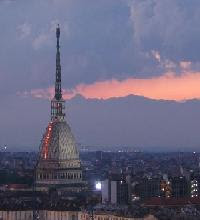
A differenza della vacanza al mare di luglio, le scorse due settimane e passa trascorse in montagna sono state all’insegna di un’ottima compagnia.
Motivo per cui ho deciso di postare una serie di immagini dedicate a questo piacevole periodo.

Unlike the vacation I took in early July, I spent the past two weeks on the mountains in company of very nice people.
This is why I decided to post a set of pictures dedicated to this pleasant time I had on the mountains.

mercoledì 6 agosto 2008

SAPETE CHE VI DICO? (GUESS WHAT I'M GOING TO DO?)


Sapete che vi dico?
Che faccio come lo scorso anno: pur avendo già trascorso due settimane al mare, me ne vado altre due settimane in montagna (a mo' del caro amico Salam ...).
Lo "smarronamento" e l'afa sono davvero troppo qui in città ad agosto, pertanto ho deciso di andare a godermi l'aria fresca, la pace (e, si spera, qualcos'altro ...) lassù fra le mia adorate vette del Piemonte.
Ci rivediamo a fine agosto.
ANONIMO VENEZIANO

Guess what I'm going to do?
The same thing I did last year: though I've already had a fortnight's holiday at the seaside, I'm going to the mountains where I'm staying another two weeks (just like my dear friend Salam ...).
Boredom, idleness and sultry weather are really hard to bear when spending August in town, so I thought I had it better go to my beloved Piedmontese mountains to enjoy cool climate and peace (and, possibly, something else ...).
I'll be back by the end of August.
ANONIMO VENEZIANO

martedì 5 agosto 2008

GITA IN MONTAGNA (A TRIP TO THE MOUNTAINS)


Sabato scorso era una giornata splendida - l'ideale per raggiungere un posto come questo: Rochemolles (Alta Valle di Susa) dove, fra l'altro, si teneva una competizione internazionale di tuffi dal trampolino "estremi".

Last Saturday was a glorious day - perfect for a trip to a place like the one shown above: Rochemolles (Upper Valle di Susa, Turin, Italy) where, among other things, an international springboard "extreme" diving contest was organized.

venerdì 1 agosto 2008

TERRA IN BOCCA (I GIGANTI) - 1971 (RE-POST)


CIAO, BINKO! QUESTA VOLTA IL LINK DOVREBBE ESSERE O.K. DAI, CHE CE LA "SPASSIAMO" DUE SETTIMANE. A PRESTO!


RE-UPLOAD DI UN ALBUM POSTATO IL 7 AGOSTO 2007, IL CUI LINK È RISULTATO "CIMITO": “TERRA IN BOCCA” (I GIGANTI).

Molti appassionati stranieri di rock progressivo hanno sentito parlare de “I Giganti” probabilmente solo per il loro album “Terra in bocca” - una vera rarità nel mercato dei collezionisti di LP. Tuttavia I Giganti si formarono a Milano nel 1964 e furono uno dei gruppi di beat italiano più famosi negli anni Sessanta, avendo registrato due album e una quindicina di 45 giri di successo prima di sciogliersi nel 1972. Ebbero perfino l’onore di suonare con i Beatles in occasione di uno dei concerti tenuti in Italia dai mitici Quattro di Liverpool. Inoltre, tutti i componenti de I Giganti erano ottimi cantanti, e il curioso contrasto fra le voci dei singoli componenti (primo su tutti il tono basso del batterista Enrico Maria Papes) rappresenta una delle peculiarità più originali nell’ambito dei gruppi rock italiani degli anni Sessanta.
“Terra in bocca” è un ambizioso album concept - un misto di progressivo e pop melodico italiano - che parla di mafia, con testi ottimi e a dir poco coraggiosi, nonché arrangiamenti musicali complessi i quali, talvolta, non si abbinano alla perfezione alle parole. Non vi sono pause fra i brani, secondo la migliore tradizione concept: l’album consiste in due sole parti (lati “A” e “B” dell’LP originale).
Proprio per il suo contenuto polemico, l’album fu bandito dalle radio italiane. Non è certo facile spiegare a chi non è italiano i motivi per cui questo album fu boicottato e censurato in patria. I testi di “Terra in bocca” parlano di un omicidio commesso in Sicilia nel 1936 - tema nel quale si intreccia una storia d’amore. Testi indubbiamente piacevoli e ispirati, tuttavia la Mafia (e intendo quella di casa nostra, in particolare quella della Sicilia - ahimé, mia terra d’origine da parte paterna) era - ed è tuttora un argomento “delicato” da affrontare.
“Negli anni Sessanta il governo italiano non solo non si interessava del fenomeno della mafia, ma esplicitamente lo negava… La mafia era (ed è tuttora) un sistema che in Sicilia (e, più in generale, nel Sud) controlla e muove gli interessi economici e di potere di una classe che possiamo grosso modo definire “borghese”. Essa non sorge e si sviluppa nel vuoto dello Stato (cioè quando lo Stato, con le sue leggi e le sue funzioni, manca) ma dentro lo Stato. La mafia, insomma, altro non è che una borghesia parassitaria, una borghesia che non imprende ma soltanto sfrutta.”
Leonardo Sciascia scrisse queste parole nel 1972 quale introduzione ad una ristampa del suo romanzo “Il giorno della civetta”. Dopotutto la lettura di romanzi può essere più piacevole e istruttiva della lettura di saggi “seri” sulla mafia. Così, se proprio volete cogliere l’atmosfera di questo album, vi suggerisco di leggere alcuni romanzi come “Il giorno della civetta” e “A ciascuno il suo” di Leonardo Sciascia.
Dopo tutta questa tiritera, la cosa che più mi preme è consigliare l’ascolto di “Terra in bocca”.
Voto personale (insufficiente / sufficiente / buono / distinto / ottimo / eccellente): Distinto.


RE-UPLOAD OF AN ALBUM POSTED ON AUGUST 7th 2007, THE LINK OF WHICH PROVED TO BE A BAD ONE: "TERRA IN BOCCA" (I GIGANTI).

Many prog fans from outside Italy probably only know "I Giganti" for their much sought-after album entitled “Terra in bocca”. Yet, this band from Milan formed in 1964 and was one of the most successful beat groups in Italy during the Sixties, having recorded two albums and around fifteen singles before splitting in 1972. They even played with the Beatles during one of the concerts held by the Fab Four in Italy. All the members were also good singers and the nice contrast between their different voices (including the characteristic bass tone of drummer Enrico Maria Papes) was one of the most impressive elements in their 60's production.
"Terra in bocca" is a very ambitious concept album - a combination of prog music and Italian melodic pop - about mafia, with strong and brave lyrics and complex music arrangements which, however, are sometimes not perfectly matched with the lyrics. Each track of the album is seamlessly linked to the following one, to form two side-long suites.
For its contents, the album was banned by the Italian radio network. It’s no easy task at all trying to explain to people living outside Italy the reasons why this good album was banned and censured by the media. The lyrics of “Terra in bocca” are about a murder committed in a small village of Sicily, Italy, in 1936. Pretty nice and inspired lyrics indeed, yet the Mafia (I mean the real Mafia as we mean it in Italy, especially in Sicily - alas, my father’s homeland) was (and still is, though to a lesser extent) a “troublesome” subject to deal with.
“In the 1960s, the Italian government did not only cope with the Mafia-related problems: they did deny that such problems existed. The Mafia was - and still is, more than ever before - a system that controls any economic and political activity in Sicily (and in Southern Italy in general). A system whose interests and goals are shared by a social class that could be approximately termed “upper class”. A system that does not grow and develop outside the Government (due to the latter being too weak or unable to fight criminals): the Mafia flourishes within the Government itself. In other words, a criminal organization that can be termed a “scrounging upper class” that exploits and impoverishes both the land and the honest people.”
Sicilian writer and novelist Leonardo Sciascia wrote this article in 1972 as an explanatory foreword to his famous novel “Il giorno della civetta” (“The day of the owl”). All in all, reading a novel about Mafia can be much more rewarding and educative than reading any essay on this subject. Therefore, if you really wish to understand the meaning of “Terra in bocca”, I recommend that you read such novels as “Il giorno della civetta” and “A ciascuno il suo” (both of them written by Leonardo Sciascia).
After this lengthy commentary, I wish most of all to recommend that you listen to “Terra in bocca”.
My personal mark (very poor / poor / pass / good / fairly good / very good / excellent): Fairly good.

I GIGANTI (1971):

Giacomo Di Martino - voce, chitarre (vocals, guitars)
Francesco Marsella - voce, tastiere, mellotron (vocals, keyboards, mellotron)
Sergio Di Martino - voce, basso, chitarre (vocals, bass, guitars)
Enrico Maria Papes - voce, batteria e percussioni, effetti sonori (vocals, drums and percussions, sound effects)

TRACK LIST:

Parti 1 e 2, divise nei movimenti seguenti (Parts 1 and 2, divided into the following movements):

1. Largo iniziale
2. Molto largo
3. Avanti
4. Avanti tutto - Brutto momento - Plim plim
5. Plim plim al parossismo - Delicato andante
6. Rumori - Fine incombente
7. Fine lontana - Allegro per niente
8. Tanto va la gatta al lardo - Su e giù
9. Larghissimo - Dentro tutto
10. Alba di note - Rimbalzello triste
11. Rimbalzello compiacente - Ossessivo ma non troppo
12. Fine

TERRA IN BOCCA (I GIGANTI) - 100 MB

THE BEST OF ANONIMO VENEZIANO'S MUSIC POSTS: MADE IN JAPAN (DEEP PURPLE) - 1972 (RE-POST)


RE-UPLOAD DI UN ALBUM POSTATO IL 15 AGOSTO 2007, IL CUI LINK È RISULTATO "CIMITO": “MADE IN JAPAN” (DEEP PURPLE).

Un disco che non richiede commenti o parole superflue. Un monumento all'hard rock, opera di un gruppo che ha gettato le basi per l'heavy metal dei decenni successivi. Basti ascoltare brani memorabili come "Smoke on the water", "Child in time" e "Strange kind of woman".
Che dire altro?
Quale voto merita un album (originariamente LP doppio) del genere?
ECCELLENTE! Non c'è il minimo dubbio!


RE-UPLOAD OF AN ALBUM POSTED ON AUGUST 15th 2007, THE LINK OF WHICH PROVED TO BE A BAD ONE: "MADE IN JAPAN" (DEEP PURPLE).

Deep Purple's "Made in Japan" needs no superfluous word or comment. A record that stands as a monument of hard rock, performed and recorded by a group who laid the groundwork for the heavy metal bands of the following decades. Just listen to such memorable tracks as "Smoke on the water, "Child in time" and "Strange kind of woman".
What else could I say?
Which mark should I put to this album (originally a double LP)?
EXCELLENT! No doubt about it!

DEEP PURPLE (1972):

Ian Gillan - voce (vocals)
Ritchie Blackmore - chitarra elettrica (electric guitar)
Roger Glover - basso (bass)
Jon Lord - tastiere (keyboards)
Ian Paice - batteria e percussioni (drums and percussions)

TRACK LIST:

1. Highway star
2. Child in time
3. Smoke on the water
4. The mule
5. Strange kind of woman
6. Lazy
7. Space trucking

MADE IN JAPAN (DEEP PURPLE) - 121 MB

ELEGANT GIPSY (AL DI MEOLA) - 1977


“Elegant gipsy”, secondo album solista di Al Di Meola (chitarrista americano, d’origine italiana ma innamorato della Spagna), viene generalmente considerato il migliore di questo artista. Un disco a base di jazz-rock e atmosfere latine, ideale da ascoltare quando, ad esempio, si è concentrati su un lavoro e si vuole ascoltare qualcosa che tiri un po’ su il morale. Ma anche un disco da ascoltare con attenzione, ammirando la bravura dei musicisti che hanno contribuito alla sua realizzazione. Davvero grandi, Al Di Meola e soci, nel dare vita a questo album.
“Elegant gypsy” presenta il meglio di Di Meola, affiancato da musucisti di prim’ordine quali Paco de Lucia, “mago” del flamenco, e Jan Hammer, tastierista della Mahavishnu Orchestra. Ne risulta un’incandescente miscela di rock, fusion e "latino", uno dei dischi di jazz-rock migliori che si possa ascoltare: tecnica esecutiva “stellare”, composizioni originali, musica brillante con cambi di tempo e di ritmo spiazzanti (si passa da sezioni “massicce” tipicamente hard a intermezzi delicati di sola chitarra). Dalle primissime battute di “Flight over Rio” ai secondi conclusivi di “Elegant gypsy suite”, una cosa è chiara: si tratta di un album che non si può fare a meno di ascoltare con incanto. I pezzi sono tutti di ottimo livello, anche se, personalmente, sono irresistibilmente attratto da “Flight over Rio” e “Race with devil on Spanish highway”. Una musica composta con rigore, ricca di variazioni di tempo e dominata dalla chitarra e dalle percussioni. L’album è interamente strumentale.
Voto personale (insufficiente / sufficiente / buono / distinto / ottimo / eccellente): Ottimo.

The second solo album by this Italian-origined American guitarist who had a strong Spanish desire, Elegant Gypsy is usually regarded as his best solo album. This is great Latin and jazz-rock, perfect if you are concentrating on something else and simply want something to keep up your spirits, or excellent if you want to listen closely and hear as tight a group of musicians as you can find. Great job, Al Di Meola and company for this spectacular collection of music.
“Elegant gypsy” shows Al in his prime, with an intractable line-up featuring flamenco god Paco De Lucia and Mahavishnu organ grinder Jan Hammer. The result is a blazing set of rock plus fusion, one of the best jazz-rock albums available. All the elements of total success are here: stellar musicianship, creative songwriting, and fun and imaginative variances in the music. From heavy hitting power riffing to soft spoken acoustic guitar interludes, it is all here. From the very first second of “Flight over Rio” to the pulsating closing seconds of “Elegant gypsy suite”, one thing is clear: this is an album that you can’t help listening with delight. I love all tracks presented in this album, my favorite ones being “Flight over Rio” and “Race with devil on Spanish highway”. The music is tightly composed with many tempo changes and dominated with guitar and percussive work. This album is fully instrumental.
My personal mark (poor / pass / good / fairly good / very good / excellent): Very good.

MUSICISTI (PERSONNEL):

Al Di Meola - chitarre (guitars)
Paco De Lucia - chitarra acustica (acoustic guitar)
Jan Hammer - piano elettrico, mini-moog (electric piano, minimoog)
Anthony Jackson - basso (bass guitar)
Barry Miles - tastiere (keyboards)
Lenny White - batteria (drums)
Mingo Lewis - percussioni (percussions)

TRACK LIST:

1. Flight over Rio
2. Midnight tango
3. Mediterranean sundance
4. Race with devil on Spanish highway
5. Lady of Rome, sister of Brazil
6. Elegant gypsy suite

ELEGANT GIPSY (AL DI MEOLA) - 51,2 MB

giovedì 31 luglio 2008

IL MEGLIO DELLA MUSICA DI ANONIMO VENEZIANO (THE BEST OF ANONIMO VENEZIANO'S MUSIC POSTS): "666" (APHRODITE'S CHILD), 1971


Gli Aphrodite’s Child sono un gruppo progressivo greco fondato nel 1967 da Vangelis Papathanassiou (tastiere), Demis Rousson (basso e voce) e Lucas Sideras (batteria e voce). Dopo l’album d’esordio “End of the world” (da me postato il 6 marzo 2007, contenente in egual misura ballate e brani di pop psichedelico reminescenti dello stile di Procol Harum e The Moody Blues), seguito da “It’s five o’ clock” - inframezzati da un gran numero di 45 giri di successo - il gruppo iniziò, alla fine del 1970, a comporre il capolavoro “666”, adattamento in musica del “Libro della Rivelazione” biblico.
Di fatto, l’album rappresenta un concept realizzato da Vangelis, con il supporto del paroliere Costas Ferris. La musica di “666” è decisamente più psichedelica e progressive di tutto quanto gli Aphrodite’s Child avevano prodotto fino ad allora. Tale orientamento non fu gradito dagli altri due componenti, i quali volevano seguire il pop melodico che aveva dato loro così tanto successo. Inoltre, Roussos aveva già in mente la carriera solista e, non a caso, incise il fortunato 45 giri “We shall dance”.
All’uscita del doppio album “666” alla fine del 1971, e avendo venduto ormai più di 20 milioni di dischi, gli Aphrodite’s Child si erano già sciolti. Tutti e tre i componenti si dedicarono ad attività soliste - carriere di successo come nel caso di Demis Roussos, cantante melodico, e Vangelis, arrangiatore, compositore di colonne sonore, e “propulsore” di quella che sarebbe stata etichettata New Age.
In ogni caso, “666” è un album imperdibile per ogni appassionato di rock psichedelico e progressivo.
Voto personale (insufficiente / sufficiente / buono / distinto / ottimo / eccellente): Ottimo/Eccellente.

Aphrodite’s Child was a Greek progressive rock band formed in 1967 by Vangelis Papathanassiou (keyboards), Demis Rousson (bass and vocals) and Lucas Sideras (drums and vocals). After releasing their debut album “End of the world” (contaning an equal amount of psychedelic pop songs and ballads in the vein of Procol Harum or The Moody Blues (see my post on March 6th 2007) and the follow-up “It’s five o’clock” - with a number of successful single hits in between - the band began to record their crowning achievement late in 1970: “666”, a musical adaptation of the biblical “Book of Revelation”.
Essentially, “666” was Vangelis' concept, created with an outside lyricist, Costas Ferris. The music that Vangelis was creating for “666” was much more psychedelic and progressive rock oriented than anything the band had done before. This did not sit well with the other band members, who wished to continue in the pop direction that had brought them success. Furthermore, Roussos was being groomed for a solo career, and recorded his first solo single "We shall dance".
By the time the double LP “666” finally came out in late 1971, and having sold over 20 million albums, the band had already split. Both Vangelis and Demis Roussos pursued successful solo careers, Roussos as a pop singer and Vangelis as one of the pioneers in New Age music, whereas Loukas Sideras pursued a less successful solo career.
In any case, an album any psychedelic/progressive rock fan should not absolutely miss!
My personal mark (poor / pass / good / fairly good / very good / excellent): Very good/Excellent.

APHRODITE'S CHILD (1971):

Vangelis Papathanassiou - tastiere (keyboards)
Demis Rousson - basso, voce (bass, vocals)
Lucas Sideras - batteria, voce (drums, vocals)

TRACK LIST:

DISC 1:

1. The system
2. Babylon
3. Loud, loud, loud
4. The four horsemen
5. The lamb
6. The seventh seal
7. Aegian Sea
8. Seven bowls
9. The wakening beast
10. Lament
11. The marching beast
12. The battle of the locust
13. Do it
14. Tribulation
15. The beast
16. Ofis

DISC 2:

1. Seven trumpets
2. Altamont
3. The wedding of the lamb
4. The capture of the beast
5. Infinity
6. Hic and nunc
7. All the seats were occupied
8. Break

666 (APHRODITE'S CHILD) - DISC 1 (51,3 MB)
http://sharebee.com/d83ab994

666 (APHRODITE'S CHILD) - DISC 2 (82,5 MB)